How to Draw Leather and Satin in Fashion Illustration: Highlights, Sheen, and Reflections
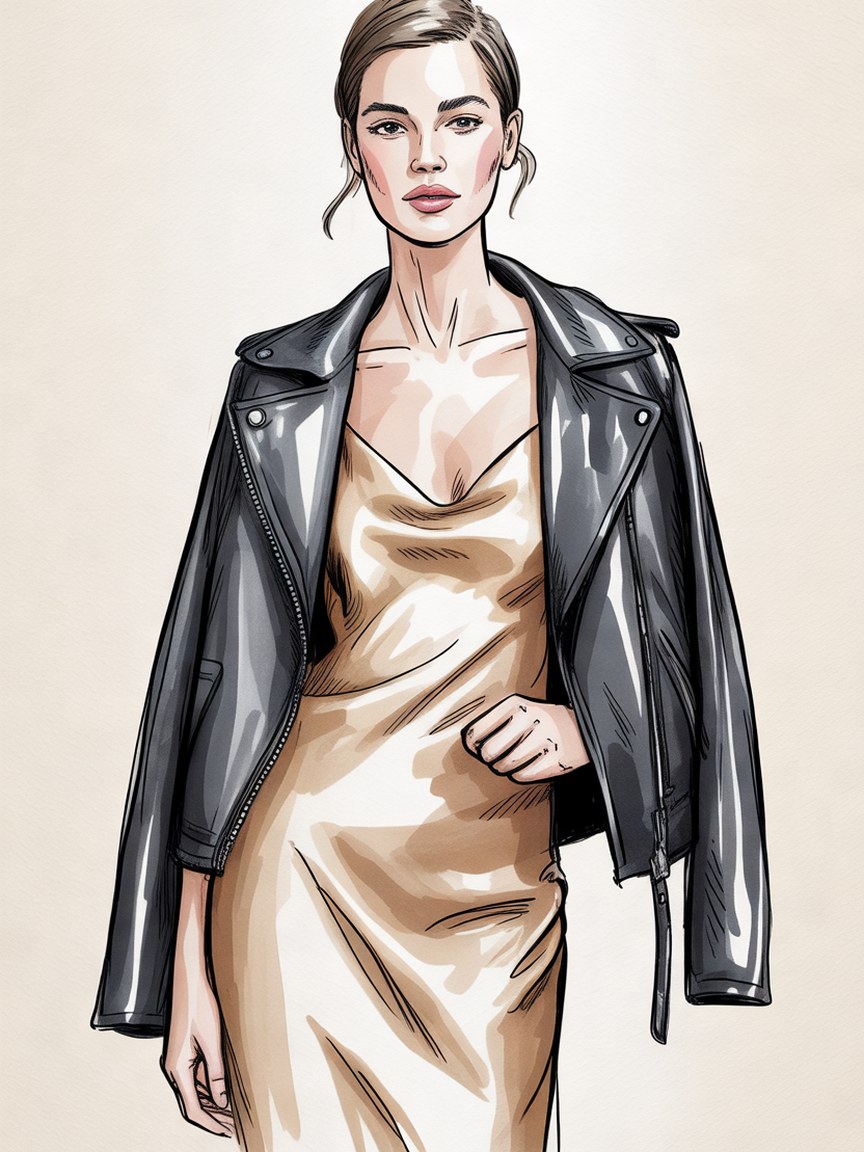
Shiny fabrics scare a lot of illustrators, but the trick is simple. Leather and satin are not defined by color or by texture. They are defined by where the light hits and where it does not. Get the highlights and the darks right, and the material appears on its own.
Matte fabrics such as cotton and wool scatter light evenly, so their shading changes gently. Glossy surfaces act more like a curved mirror. They reflect a bright source in sharp shapes and let the rest of the surface fall into deep tone. That contrast between very light and very dark is the signature of shine.
Start With Value, Not Color
Before you pick a marker, decide where your light comes from. Draw a small arrow in the margin so you do not forget. Then lay in a flat mid-tone across the garment and plan three values: a bright highlight, a mid-tone, and a deep shadow. Shiny materials need a wider value range than matte ones, so do not be shy about going darker than feels comfortable. If values are a weak spot, our color theory guide explains how to build a controlled range.
Drawing Leather
Leather is stiff and heavy. It creases at the joints and holds its shape, so the folds are firmer and more angular than in a soft knit. A black leather jacket is a useful practice subject for three reasons.
- Creases collect at the bends. Draw short, tight folds at the elbow, the inner arm, and the waist, where the material compresses.
- Highlights sit on the high points. Shoulders, sleeves, and lapels catch the light. Paint these as long, narrow, slightly curved shapes that follow the form.
- Edges stay crisp. Leather panels have clean seams, topstitching, zippers, and metal hardware. Use a fine pen for these details and keep the lines confident.
A simple leather method
- Fill the jacket with a dark, even base. For black leather, use a deep grey or blue-black rather than pure black so you have room to go darker.
- Lift or leave out highlight shapes along the shoulder, the sleeve, and the lapel edge. Keep them irregular, never perfect stripes.
- Add reflected light along the shadow side of the sleeve with a thin band of slightly lighter tone. This stops the dark side from looking flat and makes the sleeve feel round.
- Finish with creases and hardware. A few dark lines at the elbow and a tiny bright dot on each stud do a lot of work.
Faux leather and patent finishes follow the same rules. Patent is simply more extreme: brighter, harder-edged highlights and more reflection of the surroundings.
Drawing Satin and Silk
Satin is fluid, and its shine travels with every fold. Where leather has firm creases, satin has long, liquid ripples. A slip dress is the classic example, because the fabric clings and then falls in smooth columns.
- Follow the fold direction. Highlights and shadows are long streaks that run along each ripple. Draw them in one fluid motion rather than short dabs.
- Make the transition sharp. On satin, a bright highlight can sit right next to a deep shadow. Soft blending everywhere makes it look like cotton.
- Use two or three colors. A champagne dress might use a pale cream highlight, a warm gold mid-tone, and a deeper brown in the shadow folds. The shadow is a richer version of the color, not grey.
- Leave white paper. The brightest highlight is often untouched paper. Plan it before you paint.
The way the fabric moves matters as much as the shine. For the underlying drape, see our guide to drawing movement and fabric flow, and for a broader look at materials, see fabric textures in fashion illustration.
Sequins, Metallics, and Other Shine
Once you understand the mirror principle, other glossy materials fall into place. Metallic lame behaves like satin with higher contrast. Sequins are tiny reflectors, so do not draw each one. Paint the base color, add scattered bright dots in the light, and let them thin out into the shadows. Vinyl and latex read like patent leather: smooth, with big clean highlights.
Common Mistakes With Shiny Fabrics
- Too little contrast. If the darkest dark is only slightly darker than the mid-tone, shine disappears.
- Highlights that ignore the form. A highlight must curve with the surface. A straight white stripe looks like a stain.
- Pure black and pure white. Tint both toward the garment color so they feel part of the material.
- Blending everything. Keep some hard edges. They are what make the surface feel slick.
- Forgetting the body. Shiny fabrics cling and reveal the figure, so build a solid pose first. Our proportion guide is a good place to start.
A Ten-Minute Shine Drill
Take a glossy object you own, such as a leather wallet, a satin scarf, or a metallic gift bag. Place it near a single lamp and draw only its highlights and darks in three values. Skip the outlines. Repeat with a second object of a different material. Once you can tell a leather highlight from a satin one, drawing a full outfit combining both, like the one in the image above, becomes much easier.
Recommended Supplies for Drawing Shiny Fabrics
For Smooth Gradients and Sharp Edges
Copic Sketch Markers (72-color set) blend smoothly for satin and still give crisp edges for leather panels.
For Hardware and Seams
Sakura Pigma Micron Set (6 pens) gives you clean fine lines for zippers, studs, and topstitching.
For Layered Color
Prismacolor Premier Colored Pencils (72-set) let you build rich shadow tones and soft reflected light.
For Reliable Paper
Canson XL Mix Media Pad handles marker, pencil, and light washes without buckling.
Practice Shine on Ready-Made Figures
Our Fashion Croquis Template Sketchbook: Paris Edition gives you 300 pages of light grey 9-head figure templates with scenic Paris backgrounds. Trace the figure, then dress it in leather and satin.
Get the Paris EditionSome links above are affiliate links. If you purchase through them, we may earn a small commission at no extra cost to you. We only recommend products we genuinely use or believe in.